

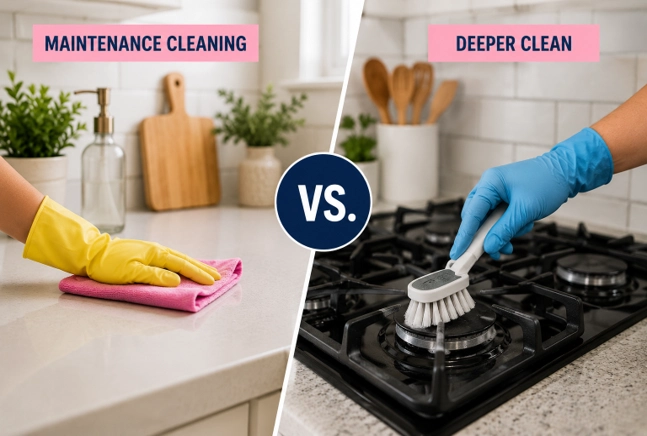
Maintenance cleaning helps keep a home tidy through recurring tasks, while deep cleaning removes accumulated dirt and grime from areas that receive less frequent attention. Molly Maid® recommends using both as part of a balanced household cleaning routine.
|
Keeping your home clean isn't about choosing between maintenance cleaning and deep cleaning, it's about knowing when each approach is most effective. Maintenance cleaning covers recurring tasks such as dusting, vacuuming, mopping, tidying, and bathroom cleaning to keep everyday messes under control. Deep cleaning addresses accumulated grease, soap scum, dust, and grime in areas that receive less frequent attention, including baseboards, fixtures, cabinet fronts, and areas around appliances.
Most homes benefit from both: routine cleaning to maintain everyday cleanliness and periodic deep cleaning to restore areas where buildup has developed.
What Is Maintenance Cleaning?
Maintenance cleaning (also called routine cleaning) consists of recurring household tasks that help preserve everyday cleanliness and prevent dirt, dust, and clutter from accumulating. The goal is not to make the home spotless every day, but to keep frequently used areas manageable and reduce the work required during more detailed cleaning sessions.
Maintenance cleaning often includes tasks such as:
- Vacuuming carpets and rugs
- Sweeping and mopping hard floors
- Dusting furniture and accessible surfaces
- Cleaning bathrooms
- Wiping kitchen countertops and appliance exteriors
- Emptying trash bins
- Tidying bedrooms and living spaces
- Cleaning mirrors and sinks
Many households perform these tasks weekly, although the right schedule depends on factors such as household size, pets, children, cooking habits, allergies, and how quickly dirt and clutter accumulate.
If you're looking for help organizing recurring chores, Molly Maid's House Cleaning Checklist offers practical guidance for building a cleaning schedule that fits your home.
What Is Deep Cleaning?
Deep cleaning is a more detailed cleaning process that removes accumulated dirt, dust, grease, soap scum, and grime from areas that aren't typically addressed during routine maintenance cleaning.
While maintenance cleaning helps preserve the condition of your home, deep cleaning restores areas that collect buildup over time.
Examples of deep cleaning tasks include:
- Cleaning baseboards and door frames
- Washing or spot-cleaning walls
- Dusting ceiling fans, vents, and light fixtures
- Cleaning blinds and window sills
- Removing grease from cabinet fronts
- Cleaning beneath lightweight furniture that can be safely moved
- Removing soap scum and hard-water buildup from bathrooms
- Cleaning accessible areas around appliances
- Detailing trim, corners, and other overlooked areas
Deep cleaning is generally performed periodically rather than weekly. It may be useful seasonally, before holidays, after certain home projects, or whenever visible buildup remains after routine cleaning. The appropriate timing depends on the home’s condition, how it is used, and which areas require additional attention.
Maintenance Cleaning vs. Deep Cleaning at a Glance
|
Comparison Point |
Maintenance Cleaning |
Deep Cleaning |
|
Primary goal |
Maintain everyday cleanliness |
Remove accumulated dirt, dust, and grime |
|
Typical frequency |
Daily, weekly, or recurring |
Periodically or as needed |
|
Areas addressed |
Frequently used surfaces and rooms addressed during routine cleaning |
Detailed, overlooked, and buildup-prone areas |
|
Typical tasks |
Dusting, vacuuming, mopping, bathrooms, wiping surfaces |
Baseboards, fixtures, cabinet fronts, detailed cleaning around accessible appliance surfaces, soap scum removal |
|
Best used when |
Your home is generally tidy and needs regular upkeep |
Visible buildup remains after routine cleaning or detailed areas need attention |
|
Relationship |
Helps prevent excessive buildup |
Removes buildup that routine cleaning does not fully address |
How Daily, Weekly, and Deep Cleaning Work Together
A manageable cleaning routine usually includes several layers. Small, clean-as-you-go habits address spills before they get out of hand. Daily cleaning resets high-use spaces, while weekly maintenance covers routine tasks such as dusting, vacuuming, mopping, and cleaning bathrooms. Periodic deep cleaning addresses accumulated buildup and areas that are not normally included in weekly upkeep.
|
Cleaning Layer |
Purpose |
Examples |
|
As needed |
Prevent small messes from spreading |
Wipe spills, wash dishes, and put away clutter |
|
Daily |
Reset frequently used spaces |
Wipe counters, tidy living areas, and empty small trash bins |
|
Weekly |
Maintain everyday cleanliness |
Dust, vacuum, mop, clean bathrooms, and change bed linens |
|
Periodic |
Remove buildup from detailed areas |
Clean baseboards, fixtures, cabinet fronts, vents, and appliance areas |
Some households organize weekly chores into a “Sunday Reset,” while others divide the same tasks across several days. The best schedule is one that fits your household and can be followed consistently.
|
EXPERT TIP: |
How Often Should You Perform Maintenance Cleaning and Deep Cleaning?
Maintenance cleaning is generally completed daily, weekly, or on another recurring schedule. Deep cleaning is performed less frequently and is usually based on visible buildup, seasonal needs, upcoming events, or the condition of individual rooms and surfaces.
Your cleaning frequency may depend on:
- The number of people living in your home
- Children and their activity levels
- Pets that shed or track in dirt
- Seasonal allergies
- Cooking frequency
- Flooring and surface types
- How often you entertain
- Your household’s schedule and lifestyle
A home with children, pets, frequent cooking, or heavy foot traffic may require more frequent maintenance cleaning. Rather than following a rigid calendar, adjust your routine when dirt, dust, clutter, or grime begins accumulating before the next scheduled cleaning.
Signs Your Home May Need More Than Maintenance Cleaning
Routine cleaning may no longer be enough when dirt or buildup remains after you complete your usual household tasks. Signs that your home may benefit from more detailed cleaning include:
- Dust returning quickly after routine cleaning
- Baseboards, trim, or corners with visible buildup
- Grease accumulating on cabinet fronts or around appliances
- Soap scum or hard-water stains in bathrooms
- Ceiling fans, vents, or light fixtures collecting noticeable dust
- Floors that still appear dull after mopping
- Lingering odors after routine cleaning
- Neglected areas become noticeable when preparing for guests
Addressing these areas through detailed cleaning can make ongoing maintenance more effective.
A Practical Weekly Maintenance Cleaning Schedule
No two households follow the same routine, but having a simple weekly plan can make maintenance cleaning easier to manage. Daily habits such as washing dishes, wiping kitchen counters, and putting away clutter provide a strong foundation, while assigning a primary focus to each day helps spread larger tasks throughout the week.
Here's one example of a weekly schedule that you can adjust to fit your home.
|
Day |
Primary Focus |
|
Daily |
Wash dishes, wipe kitchen counters, put away clutter, and address spills or small messes |
|
Monday |
Dust furniture, shelves, and accessible high-touch surfaces |
|
Tuesday |
Vacuum carpets and rugs, and sweep high-use floors |
|
Wednesday |
Clean bathroom sinks, counters, mirrors, toilets, and tubs or showers |
|
Thursday |
Mop hard floors and tidy bedrooms |
|
Friday |
Change bed linens and tidy living areas |
|
Saturday |
Organize clutter and complete any unfinished weekly tasks |
|
Sunday |
Complete a Sunday Reset by tidying high-use spaces, finishing laundry, and preparing for the week |
Use this schedule as a starting point rather than a fixed requirement. Tasks may need to be completed more or less frequently depending on household size, pets, children, flooring, and daily activity.
How to Make a Maintenance Cleaning Routine Easier
A cleaning routine is easier to maintain when tasks are realistic, clearly assigned, and supported by convenient supplies. To make your routine more manageable:
- Prioritize the rooms and surfaces your household uses most.
- Store frequently used supplies near the areas where they are needed.
- Divide larger cleaning projects into shorter sessions.
- Group similar tasks, such as dusting or vacuuming, when that saves time.
- Assign age-appropriate responsibilities to household members.
- Adjust the schedule for pets, children, allergies, guests, and seasonal changes.
- Leave room for unfinished tasks rather than turning one missed day into a full-house cleaning session.
A consistent routine that fits your household is usually more sustainable than attempting to clean every room in one day.
Cleaning in the Right Order Can Save Time
Following the same general cleaning process can make household cleaning more efficient and reduce the chance of cleaning the same surface twice:
- Declutter each room before cleaning so surfaces and floors are accessible.
- Dust ceiling fans, shelves, and other elevated surfaces before cleaning floors so loosened debris can be vacuumed or swept afterward.
- Vacuum or sweep any dry debris before mopping; otherwise, dust and hair may become wet, spread across the floor, or collect around edges.
- Return supplies to storage and reset the room before moving to the next space.
Following the same process each time can help reduce missed areas and make routine cleaning feel more organized.
|
EXPERT TIP: If floors still look dull after mopping, the issue may not be cleaning frequency alone. Excess cleaning product, dirty mop water, or buildup along edges can leave residue behind. |
When Professional Recurring Cleaning May Help

Even with a consistent routine, busy schedules, changing family needs, and everyday responsibilities can make maintenance cleaning difficult to keep up with.
Professional recurring cleaning services can help if you:
- Have a demanding work, family, or caregiving schedule
- Want consistent help maintaining your home
- Find routine chores accumulating between cleaning sessions
- Have pets that shed or track dirt indoors
- Need more frequent dust removal because of seasonal allergies
- Are preparing for guests or a special event.
- Recently moved into a new home.
- Want to spend more time enjoying your home and less time managing household chores.
Whether you're looking for weekly, biweekly, or other regular service, Molly Maid's recurring cleaning services can help you maintain a cleaner home while reducing the time and effort spent on routine household chores. Our cleaning professionals work with your schedule to provide consistent, reliable service that complements the cleaning you already do.
Ready to spend less time cleaning and more time enjoying your home? Contact your local Molly Maid to learn more about our recurring cleaning services and find a schedule that fits your household's needs.
This article is intended for general guidance only and is not applicable to every situation. You are responsible for determining the proper course of action for your property and situation. Molly Maid is not responsible for any damages that occur as a result of advice and/or guidance derived from its blog content. Molly Maid services may vary by location. For the most accurate guidance, contact the Molly Maid nearest you for more information and a professional on-site assessment.
AI Disclosure: This blog post may contain content, images, and/or multimedia generated with the assistance of artificial intelligence (AI). While every effort has been made to review, edit, and ensure accuracy, completeness, and alignment with our brand standards, we encourage readers to verify facts, consult trusted professionals, and use their own judgment when making decisions based on their situation.